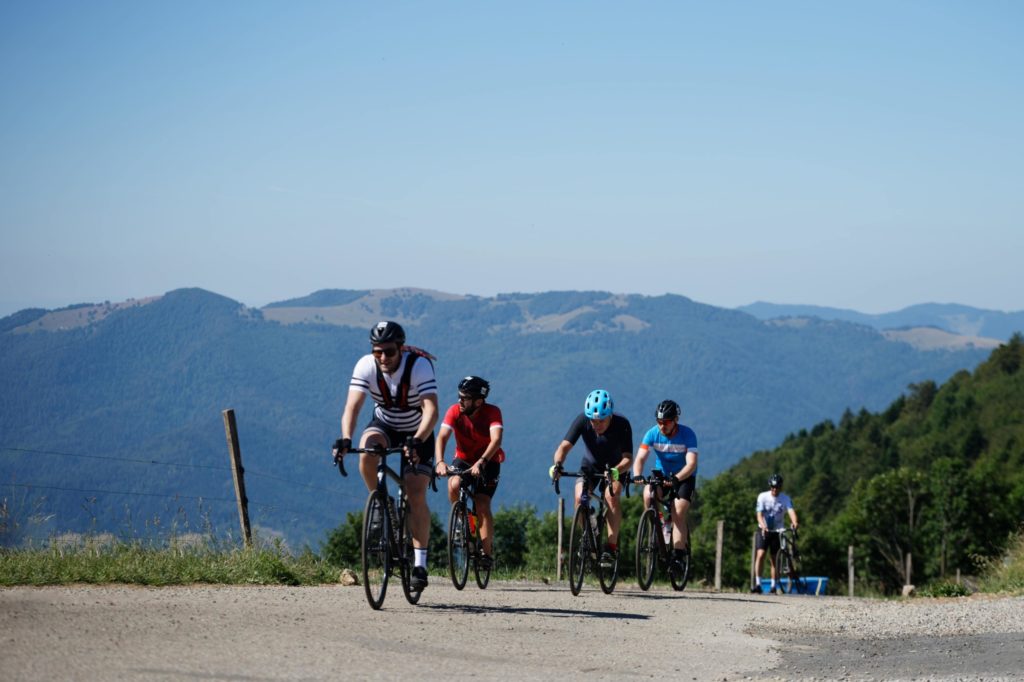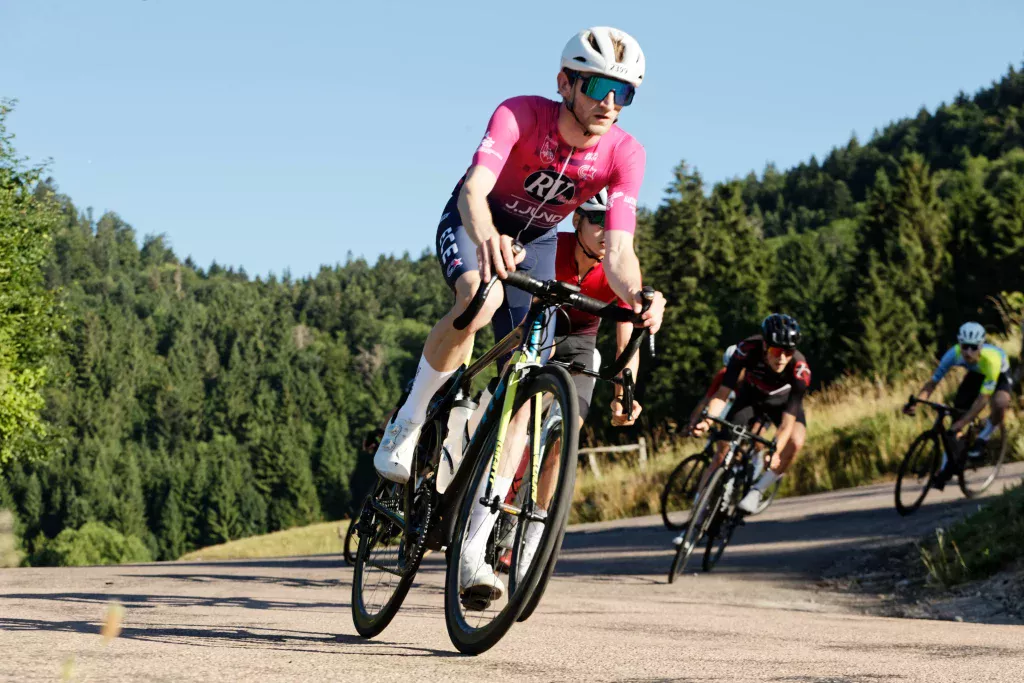

For many cyclists, training only involves pedalling and is measured in hours of riding. However, it may be beneficial to practise other sports activities.
Physical preparation during the close season
When the events are a long way off, the close season is a good time to practice other activities. You will use your body differently, avoiding muscle imbalances and correcting your weaknesses. Above all, you will keep fit without the risk of overtraining.
The choice of activity depends on :
- Your specific needs, the region and the climate
- The opportunities available (swimming pool, gym, ski runs etc.)
- ... And on what you want to do! (Reread our article onpersonalising your practice ).
Running
A practical solution, any time of day and in any weather. It’s quick and easy to put on a pair of running shoes when you leave work or are away. A good running session may only take half an hour, and there’s no need to spend a fortune on equipment.
Be careful however, as if you have not run for a long time, it is absolutely essential to start very gradually to avoid injuries. You use your muscles and tendons differently when you run than on a bike. In the first few sessions, alternate running and walking, and then run on flat ground. You can gradually increase the distance, and possibly try trail running.
Nordic walking and hiking
These are beneficial. Nordic walking offers an alternative to running and provides training by also using the upper body. Hiking involves walking for several hours. Planning a day away during the close season does a lot of good... to both mind and body.
Swimming
This is an excellent means of working on your breathing and muscles in general, without stress on your joints. If you can swim and have a swimming pool nearby, a few months’ subscription is a good investment !
Limit the breaks, and if possible alternate the swimming styles: crawl, breaststroke and backstroke.
Cross-country skiing
This remains the winter training method par excellence. Full muscle workout and maintenance of aerobic power guaranteed. Cross-country skiing is not accessible to everyone, and also requires technical training. But even if you don’t ski regularly, perhaps you could exceptionally plan a short stay in the mountains? In that case, give priority to alternative cross-country skiing, which requires less technical skill than skate skiing.
Although downhill skiing offers fewer cardiorespiratory benefits, enthusiasts will probably still go. Be careful however, especially on the first descents (which should act as a warm-up) and at the end of the day (when you are tired).
Body building
This has three aims :
- Increase the strength of the muscles used for pedalling (especially the quadriceps).
- Improve the muscle tone of the trunk (core training).
- Use muscles that are hardly used when riding (upper body in particular) to improve body balance.
You can have high quality body building sessions without specific equipment. This is generally called “ core training ”. Only exercises to develop maximum strength need to be carried out in a specialised gym (the leg press is the safest and most effective machine).
In any case, body building must be combined with flexibility sessions (joint mobility and stretching) as well as maintenance of the specific movement (on an exercise bike for example).
Team sports
These develop speed, coordination and proprioception, while having fun in the close season. However, there are real risks of injury that you should be aware of, that are not obvious when you are caught up in the game..
Cross-training
Too many cyclists have only one obsession from the start of January: clock up the kilometres! But it is a good idea to combine cycling training with other activities. Cross-training will enable you to adapt your training to the weather and stay motivated.
You can also do cross-training within the same day. Here are a few examples among many other possibilities:
- 45 minutes of running + 45 minutes of exercise bike
- 2 hours of road cycling in the daytime + swimming session in the evening
- Body building session + 1 hour of exercise bike
- 2 hours of Nordic walking in the morning + 2 hours of road cycling in the afternoon
Of course, as the events draw closer the proportion of training specific to cycling will increase. However, like triathletes, cyclosportive riders don't only practice cross-training in the close season, but throughout the year.
In any case, it is a good idea to regularly do short core training and stretching sessions , even in the summer. (See our article on this topic). This will maintain your abdominal muscle tone and help to avoid stiffness and backaches.
You can also replace the traditional recovery ride with a short swimming session, which elite cyclists already do.
Strength-building cycles can be carried out by body building exercises in a gym even at the height of the season, but this physical preparation must be specific and supervised by a trainer specialised in cycling. You should therefore give priority to specific body building on a bike (reread our article on training without passes )
Éric GEHIN
Conseiller sportif Breveté d’Etat
DU Biologie de l’Entraînement