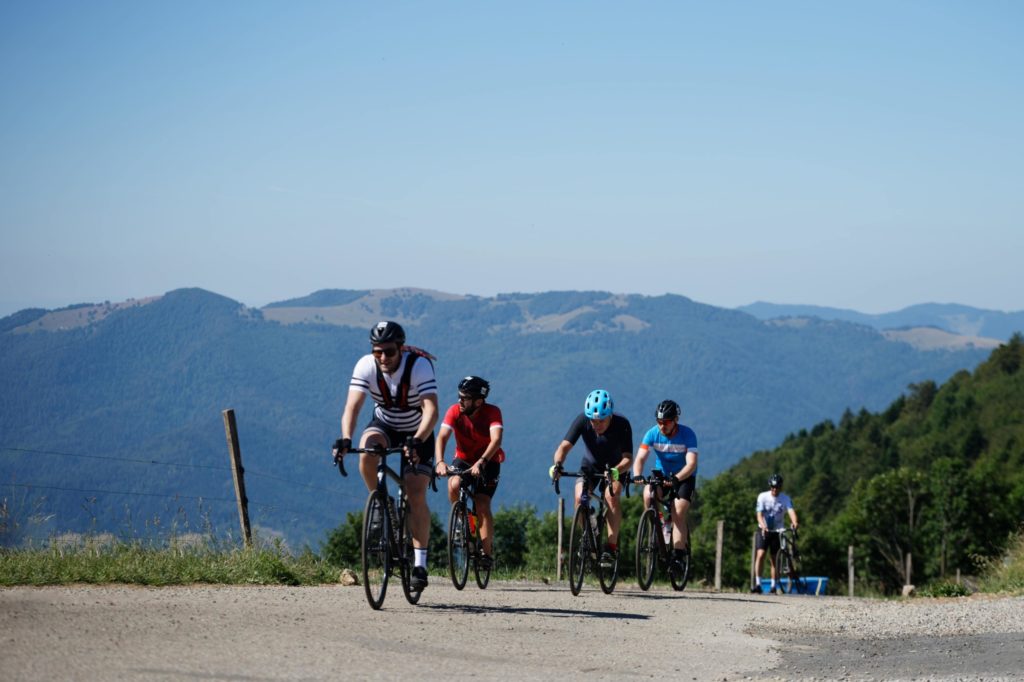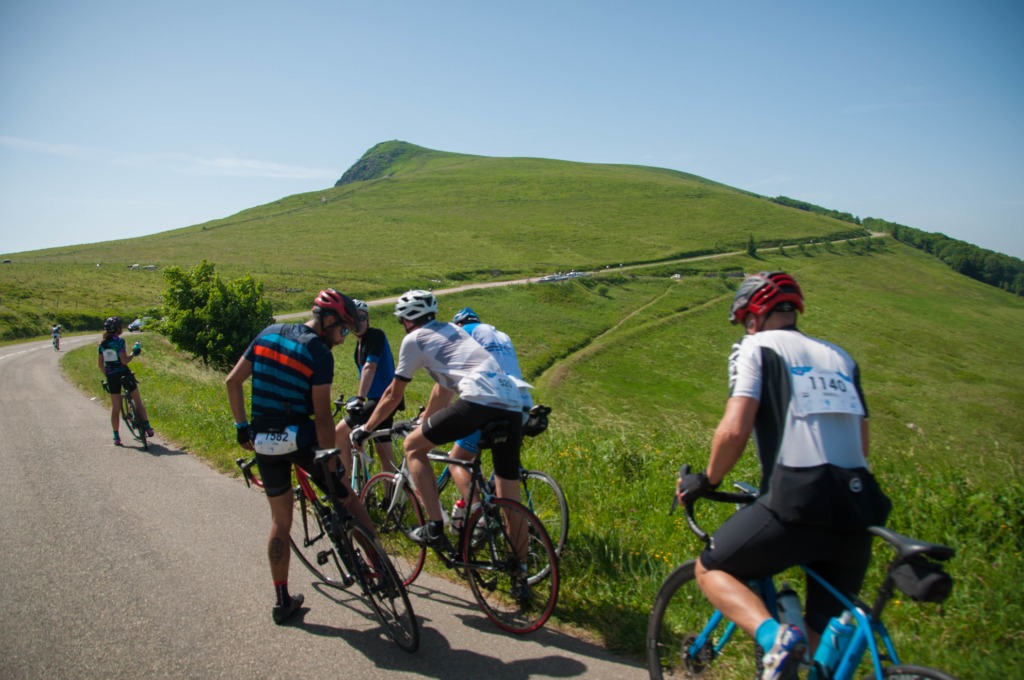
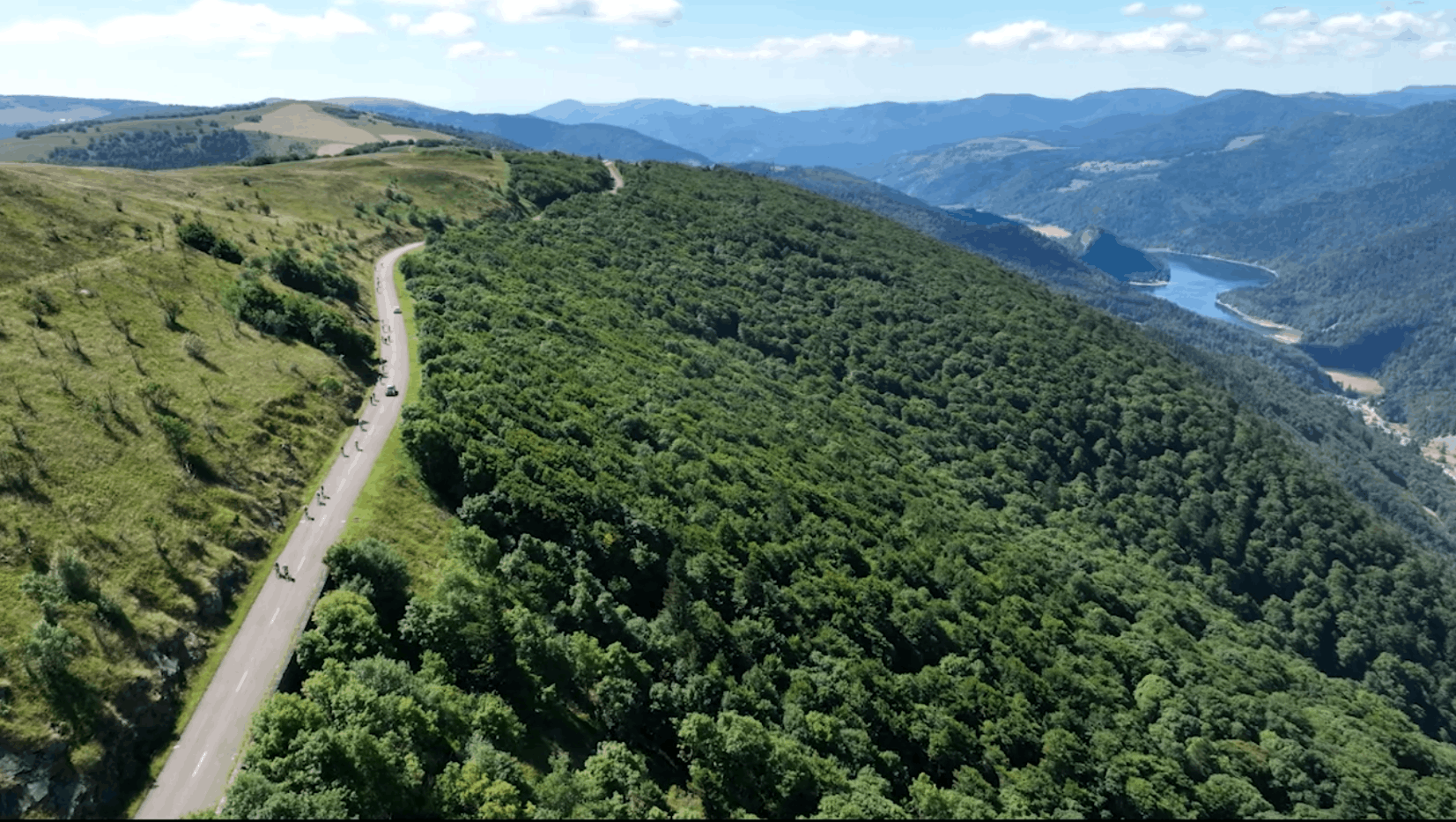
L’Alsacienne 2026 offers many challenges, with the climb to the Col du Haag, the Markstein, the Petit Ballon... To finish the cyclosportive or randonnée successfully, you must be able to climb one pass after another.
Manage pacing on passes
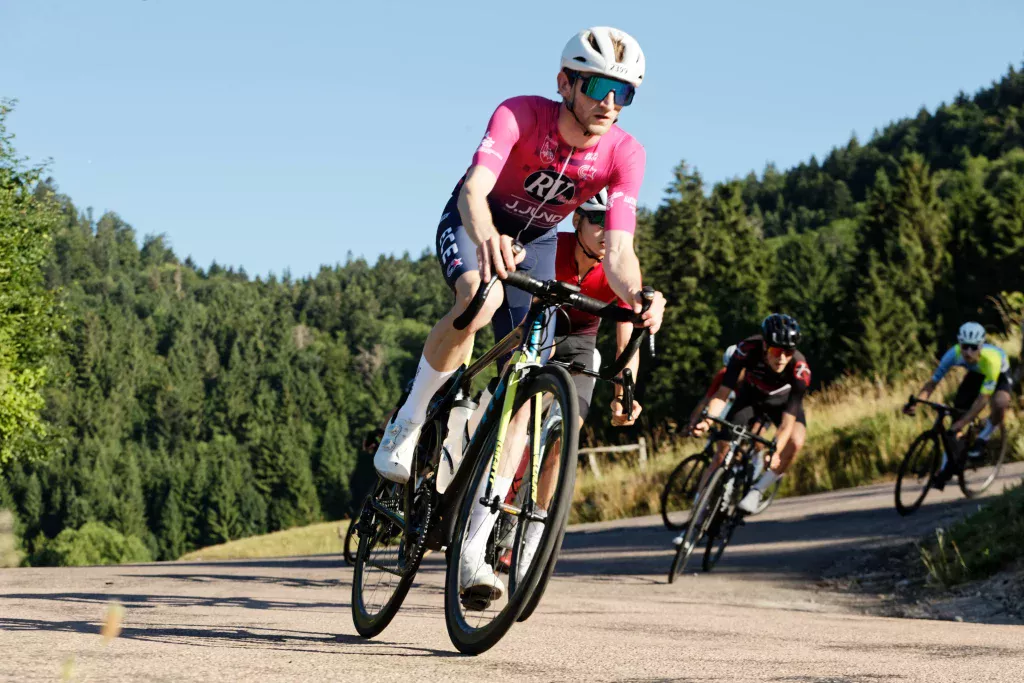
Climbing the first hill as if it was the only one is a mistake that can be avoided. Avoid being influenced by the other cyclists.
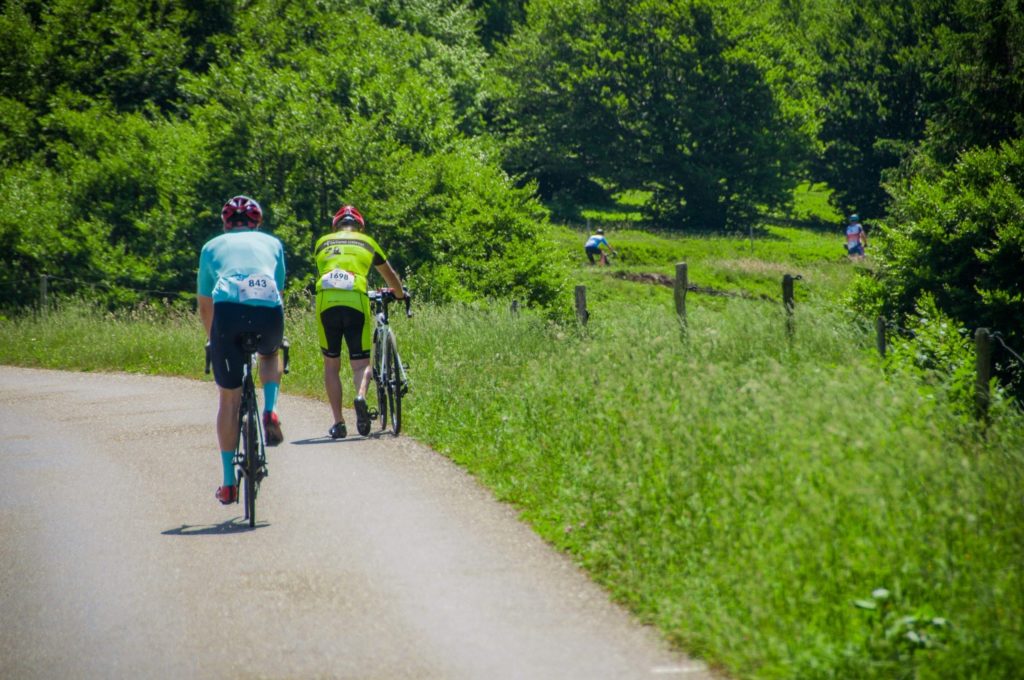
Col d’Oderen is the first climb of L’Alsacienne (except for the 56 km randonnée). Even if lots of competitors overtake you, don’t panic. Lots of cyclists start off too quickly and you will see them later, maybe even on the Col du Haag.
The climb to the Col du Haag must also be tackled carefully if you are on one of the three cyclosportives, as after the summit and the route to the Markstein, you will have to climb other passes !
In general, successful climbers master the art of finding the right pace, i.e. a steady but manageable speed. Breathlessness will be noticeable on hills, but will remain under control. Exchanging a few words will not really be a problem, but it will be impossible to have a conversation. Being able to find the right pace requires work. Training involves making efforts to reproduce the characteristics of a pass.
Choosing the right pedalling frequency and gear ratio
A frequency that is too low will tire your quadriceps. The right strategy involves remaining supple. You can do this quite easily on slopes of less than 10% by maintaining a frequency higher than 75 RPM. On the other hand, steeper gradients (like those on the climb to the Col du Haag for example) complicate matters, and greater pedalling effort will be needed. It is therefore sensible to give priority to smoothness as soon as possible, and save your strength for the most difficult parts of the pass.
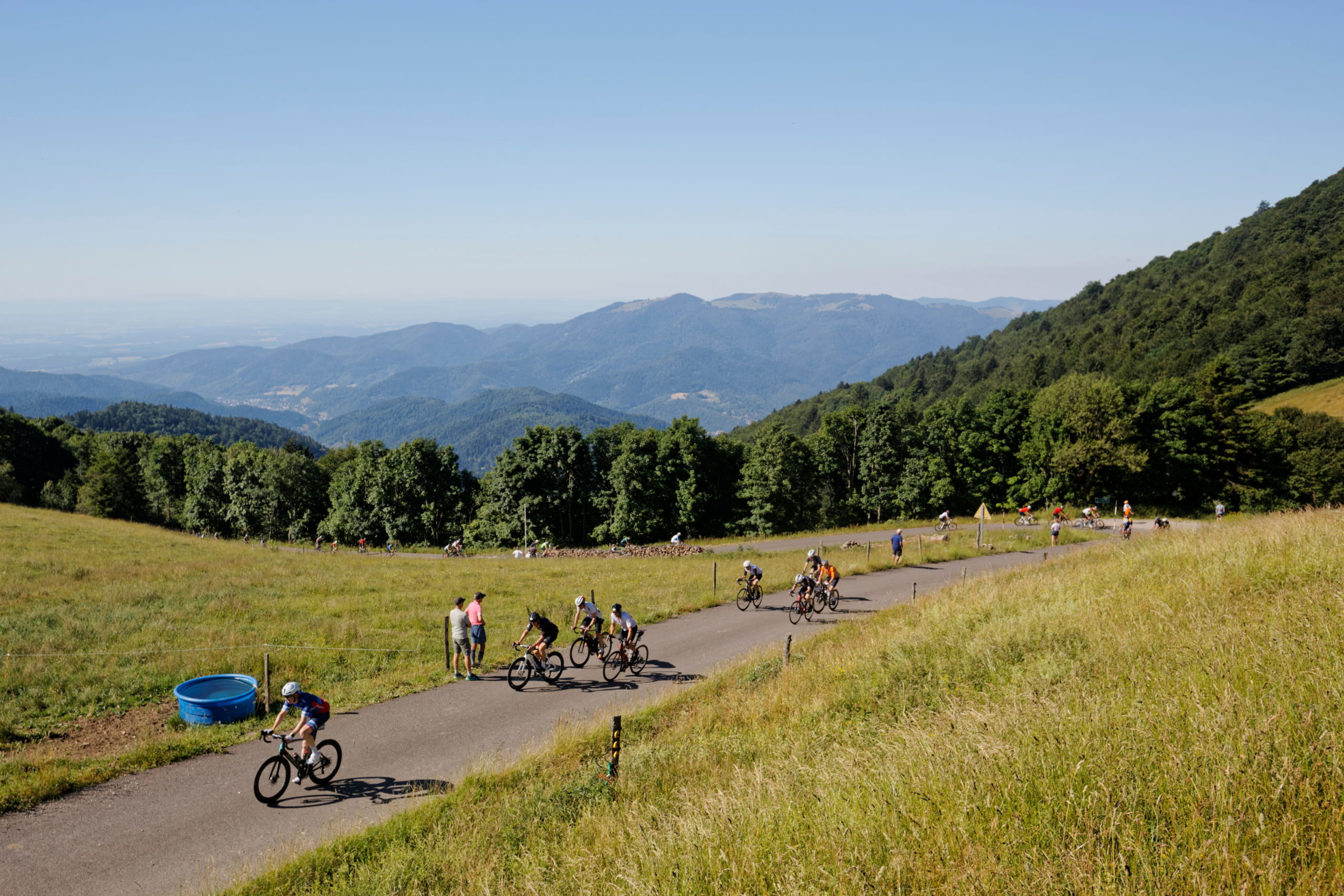
It should be noted however that not all cyclists have the same abilities and there isn’t an optimum speed for everyone. Perhaps you are a cyclist who prefers quite a high gear? Or one who likes a more natural pedalling speed? Above all, to manage your effort as effectively as possible on the day of the event, be yourself!
Riding out of the saddle
Each person’s ability will also influence their position on the bike. It is hard to make a rule about the right way to pedal. You only need to watch the champions in the Tour de France on television to see that there is no single method. We are all able to spontaneously decide whether or not to stand up on the pedals, according to our motor preferences*.
In any case, allow yourself to ride out of the saddle for short periods throughout the course, while remaining supple... it’s an excellent way of relaxing the quadriceps and lumbar vertebrae.
But in general, cycling is a sport practised sitting down, and it is more economical to stay in the saddle. Standing up uses more muscles and therefore requires more energy and a higher heart rate. You should therefore keep it for the most difficult sections. On 28 June, you will have to tackle the irregular Col du Haag, which is a good example as you need to alternate between sitting and standing up. It is therefore a good idea to prepare for it. (More advice here: https://www.alsacienne-cyclo.org/en/cyclosportive-de-montagne-sentrainer-sans-col/).
Feed zones to stay the course
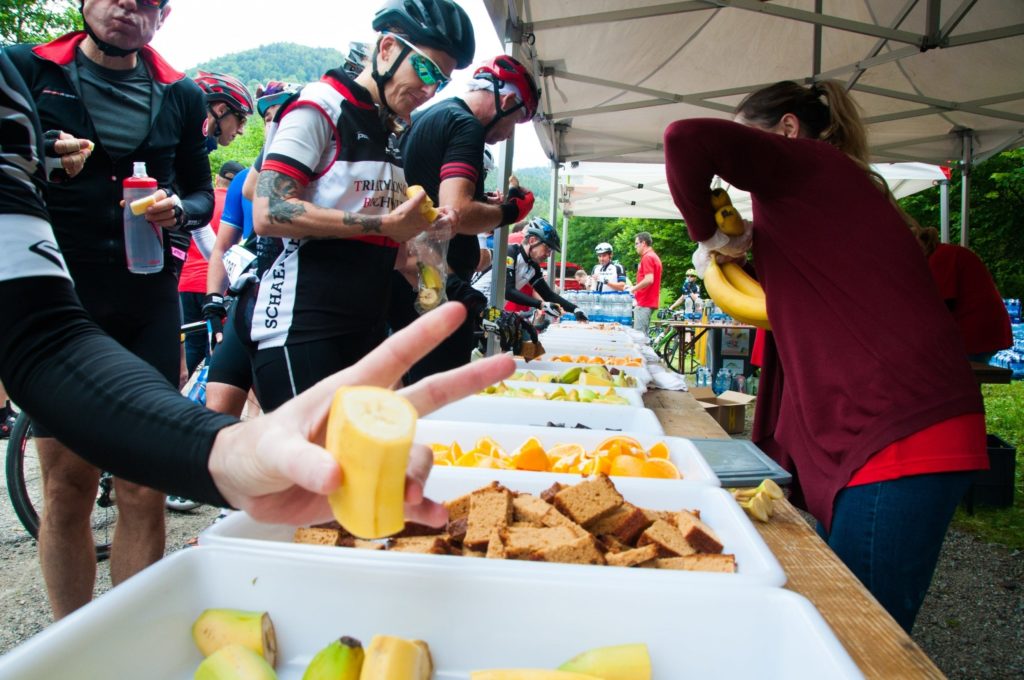
We encourage you to re-read our article on food and feed zones . It is obvious that climbing one pass after another draws on your reserves of glycogen, the sugar source stored in the muscles and liver that provides the energy needed for effort throughout the course.
To preserve glycogen, it is necessary to eat regularly. Remember to do so right from the first few kilometres. Take advantage of the valleys to eat and drink. Eat something sweet before climbing each pass. Finally, don’t hesitate to stop at the feed zone provided by the organiser, as it is better to add two or three minutes to your time than to have a blackout!
Mind over matter and listening to your body
Climbing a pass is like a time trial: it involves not focussing too much on the others, but listening to your body. We recommend an approach based on how you feel, your breathing, the smoothness of your pedalling... even if it means neglecting your speedometer for a while.
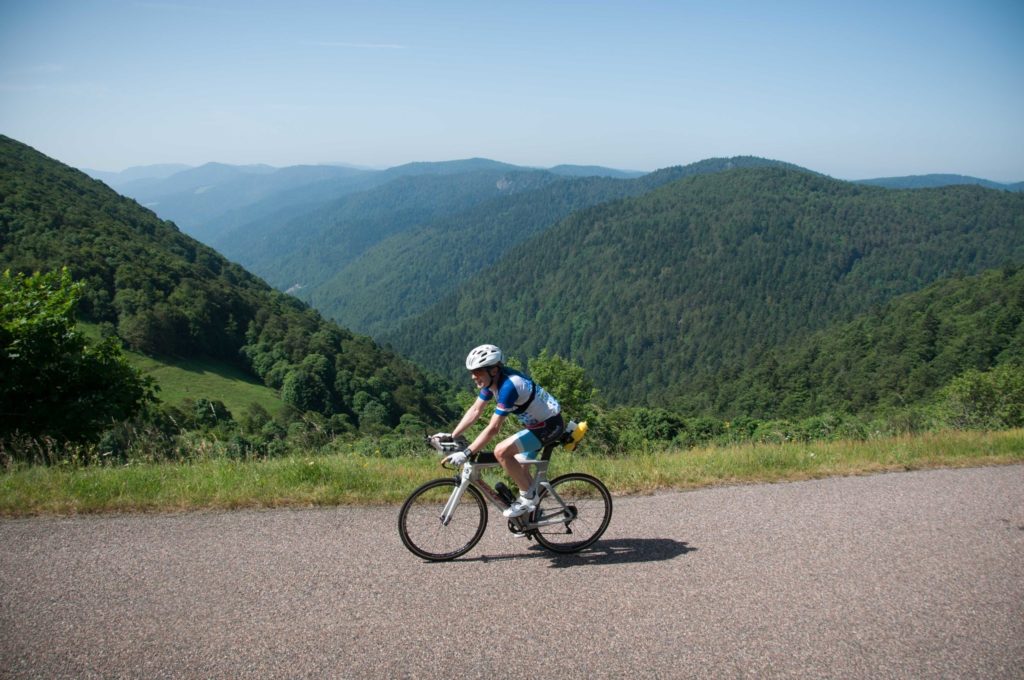
From the start, remember that you will have to climb lots of passes. Allow yourself therefore to enjoy the first few passes, perhaps by appreciating the scenery. There will be time later on, at the end of the course, to count down the remaining kilometres. You will have noted that L’Alsacienne allows you to switch to a shorter course. The first time you cross the Markstein you can choose a shorter route and follow the 120 km Piccolo Fondo. If you are in difficulty the second time you cross the Markstein, you can go straight to the finish point, opting finally for the 150 km Medio Fondo.
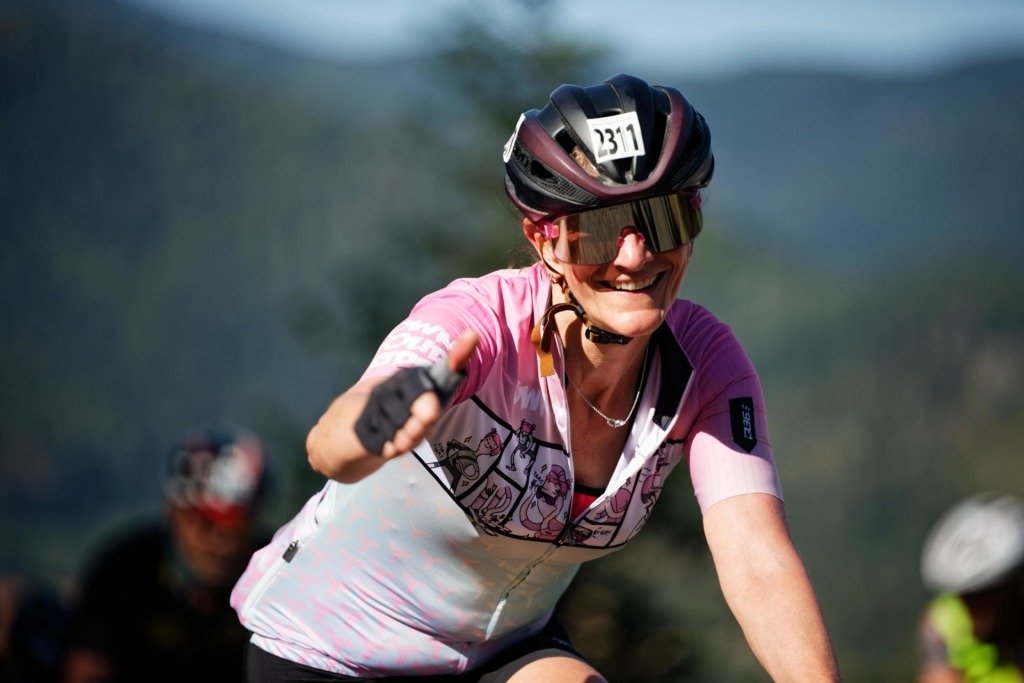
Yes, mind over matter is important, but it is essential to be reasonable and listen to your body !
* The concept of “motor preferences” is not based on a model to be copied but on the individual’s own abilities. It is increasingly used in physiotherapy but also in sports training. Reference: GINDRE, Cyrille. Terrien ou aérien ? Éditions Volodalen, 2020.
Éric GEHIN
Conseiller sportif Breveté d’Etat
DU Biologie de l’Entraînement